Patty McCord is the former Chief Talent Officer of Netflix and architect of the Netflix Culture Deck, hailed as one of the most important contributions to modern business. Today, she's an author and speaker who shares ideas on creating high-performing, human-centered workplaces.
At Oslo Business Forum, Patty walked leaders through the development of Netflix's culture, demonstrating how building a team of empowered, accountable, and outcome-focused adults can supercharge an organization's results.
Rethinking How We Work
When Patty joined Netflix in 1998, the company's co-founder Reed Hastings made her an offer she couldn't resist: "Let's create the company we always dreamed of."
For Patty, that meant starting with a simple ambition: build a company filled with talented adults doing great work together.
What followed became one of the most influential experiments in organizational culture. As Netflix evolved from a DVD-by-mail startup into a streaming and digital content powerhouse, Patty and her colleagues repeatedly challenged conventional assumptions about hiring, performance, feedback, and management. The resulting Netflix Culture Deck became famous well beyond the company, documenting a system they developed over time.
"I realized … I wasn't talking about a PowerPoint presentation. I was talking about a system we had built in the organization."
Today, as AI promises to transform work, Patty believes leaders have an opportunity to ask a fundamental question: If we were building our organizations from scratch, would we still work this way?
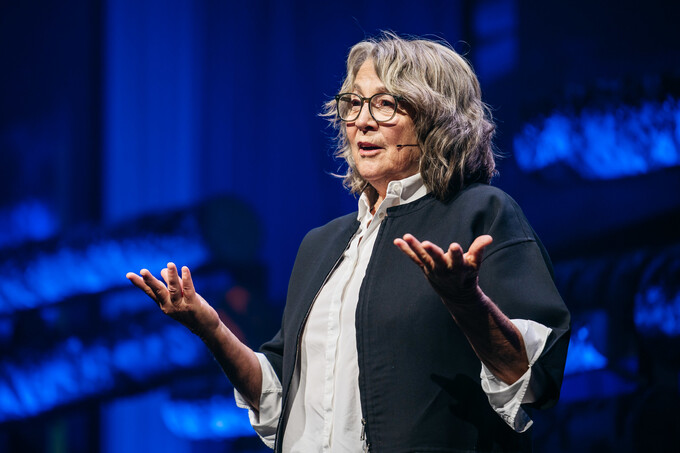
Patty McCord: Mastermind behind the legendary 'Netflix Culture Deck'
Build the Culture You Can See
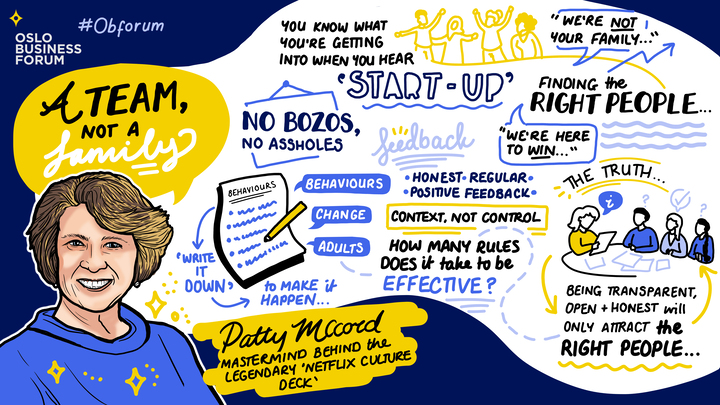
When Netflix began defining its culture, Patty wasn't interested in writing down lofty values. She wanted to document behaviors people could actually see and engage in.
"If we say we're open to feedback, I want to see you do it," she said.
The distinction between what we say and what we do matters. Culture is reflected in how people behave, make decisions, and work together.
Over time, Netflix's thinking evolved around several principles: build a high-performing team, hire capable adults, and give them the freedom and information they need to make good decisions.
That also meant rejecting one of the most persistent corporate metaphors: a company as a family.
Patty believes organizations are better understood as teams that exist to accomplish something together, and their needs change over time. That sometimes requires difficult but honest conversations about whether the people who helped an organization succeed yesterday have the capabilities the company needs tomorrow.
Tell People the Truth
Patty learned that lesson firsthand as Netflix prepared to become a public company. Many members of the team were strong performers who had contributed to the company's success, but they lacked experience working in a public company.
The issue wasn't their performance; the organization's needs had changed.
Patty began questioning the HR practices most organizations use to manage situations like these, including performance improvement plans. If someone is performing at the top of their ability but their skills no longer match what the organization needs, she argued, putting them through a process designed to improve their performance isn't very honest or very effective.
"They're wonderful people, but they're the wrong people. What do I do?"
Her willingness to challenge established systems like this became a habit. The question she continually asked is one that leaders can apply across the organization: what systems are getting in the way of people doing their best work?
Give People Context, Not Control
Treating employees like adults doesn't mean stepping aside and hoping everything works out. It means giving people the context they need to exercise good judgment.
That requires leaders to share information, communicate clearly, and help employees understand the business well enough to make decisions without constantly seeking permission.
Patty described this philosophy as "context, not control."
The pandemic offered a real-world experiment in what that looks like. For years, many leaders insisted remote work was impossible. They believed they needed to see employees working to know they were productive. Then, almost overnight, organizations around the world had no choice but to change.
Patty said, "We started measuring people by what they did, not what we watched them do."
Organizations discovered new ways of working and began to focus more closely on outcomes. But when the crisis passed, many returned to familiar practices without asking what they had learned.
Patty's lesson is this: leaders must resist reflexively returning to "best practices" simply because they're familiar. Instead, ask what works now.
Use AI as an Opportunity to Start Again
Patty believes organizations are now facing another opportunity for reinvention.
As AI changes how people access information, solve problems, and get work done, leaders have two choices: they can fit new tools into existing organizational structures, or they can reconsider the structures themselves.
"Ask yourself, 'If I started from scratch, would I still do this?'"
Look at the rules, permissions, hierarchy, and processes in your organization. Ask what purpose each serves and whether it would still be necessary if you were to redesign the organization today.
It's also important to reconsider a leader's role. In an environment where AI can produce answers almost instantly, the more valuable human capability is knowing how to ask better questions.
The leaders best positioned to embrace AI, Patty argued, will be those who learn to question rather than simply seek answers.
Build the Team for Where You're Going
Rethinking work also requires leaders to look forward. To do this, Patty offered a simple exercise: imagine your organization's or team's success six months from now.
What's happening that isn't happening now? What results are you producing? What does the work look like? What do people need to make that future possible?
Starting with the future makes it easier to identify capability gaps, determine who can grow into new demands, and understand where different skills may be required. This creates the foundation for more honest conversations with employees about where the organization is headed, what success looks like, and how they fit into that future.
Throw Something Away
Patty left leaders at Oslo Business Forum with one assignment: "I want you to throw something away."
A rule. A permission. A process. An assumption about how work is supposed to happen.
The challenge is to build organizations around what people and teams need to accomplish next, give capable adults the information and freedom to make good decisions, and remain willing to question systems that no longer serve their purpose.
The future of work will be created by leaders and teams willing to rethink the work itself.
Key Points
- Question inherited systems. Rules and processes often persist because they're familiar, not because they're effective. Ask whether you would create them again today.
- Define culture through behavior. Values become meaningful when people can see what they look like in practice.
- Treat employees like capable adults. Give people the context, information, and freedom they need to exercise good judgment.
- Choose honesty over process. Direct conversations about capabilities and changing organizational needs are more humane than systems designed to avoid difficult truths.
- Build for the future. Start by defining what an exceptional team needs to accomplish, then determine the skills and people required to get there.
Questions to Consider
- If you were building your organization from scratch today, which rule, process, or assumption would you choose to throw out?
- What will your team need to accomplish six months from now, and what capabilities will it need that it doesn't have today?
- Are you giving people enough information and context to exercise good judgment, or are your systems designed around permission and control?