
OBF 2026 Highlights

Hori_Line_v01

Oslo Business Forum 2026 brought together 4,000 decision-makers over two days. Eager to connect and learn, these executives embraced insights from some of the greatest minds in business today.
 
Insights from this year's event will help you thrive at the intersection of technology and human ingenuity.

THE HUMAN EDGE

Hori_Line_v01
In an era of disruption, leaders and organizations must lean on creativity, courage, trust, and resilience to thrive. The Human Edge helps you unlock the strengths that no machine can replicate.
 
Leadership today is about mining the human capacity to inspire, to adapt, and to shape environments where people and ideas can flourish. It’s about leading with clarity in complexity, building trust in a digital-first world, and creating meaning in an increasingly tech-first world.
55531897799_6fe578c6e4_c
OBF 26 Krafftwork-263
55532184200_cda03f8b55_c
OBF 26 Krafftwork-254
55531972149_e65b1ab88d_c
OBF 26 Krafftwork-697
55531948329_4c39a19758_c
OBF 26 Krafftwork-872
55532220625_e5a5c89e72_c
OBF 26 Krafftwork-999

“National competitiveness is underpinned by the competitiveness of enterprises that invest in innovation, invest in talent, invest in leadership."

– David Bach

“Think about your roles, think about this time, think about the impact you have on other people. Be courageous.”

– Jesper Brodin

“Ask yourself, ‘If I started from scratch, would I still do this?’”

– Patty McCord

“The gap between what we can imagine and what we can create is getting smaller and smaller. We are in an age of limitless horizons.”

– Gary Hamel

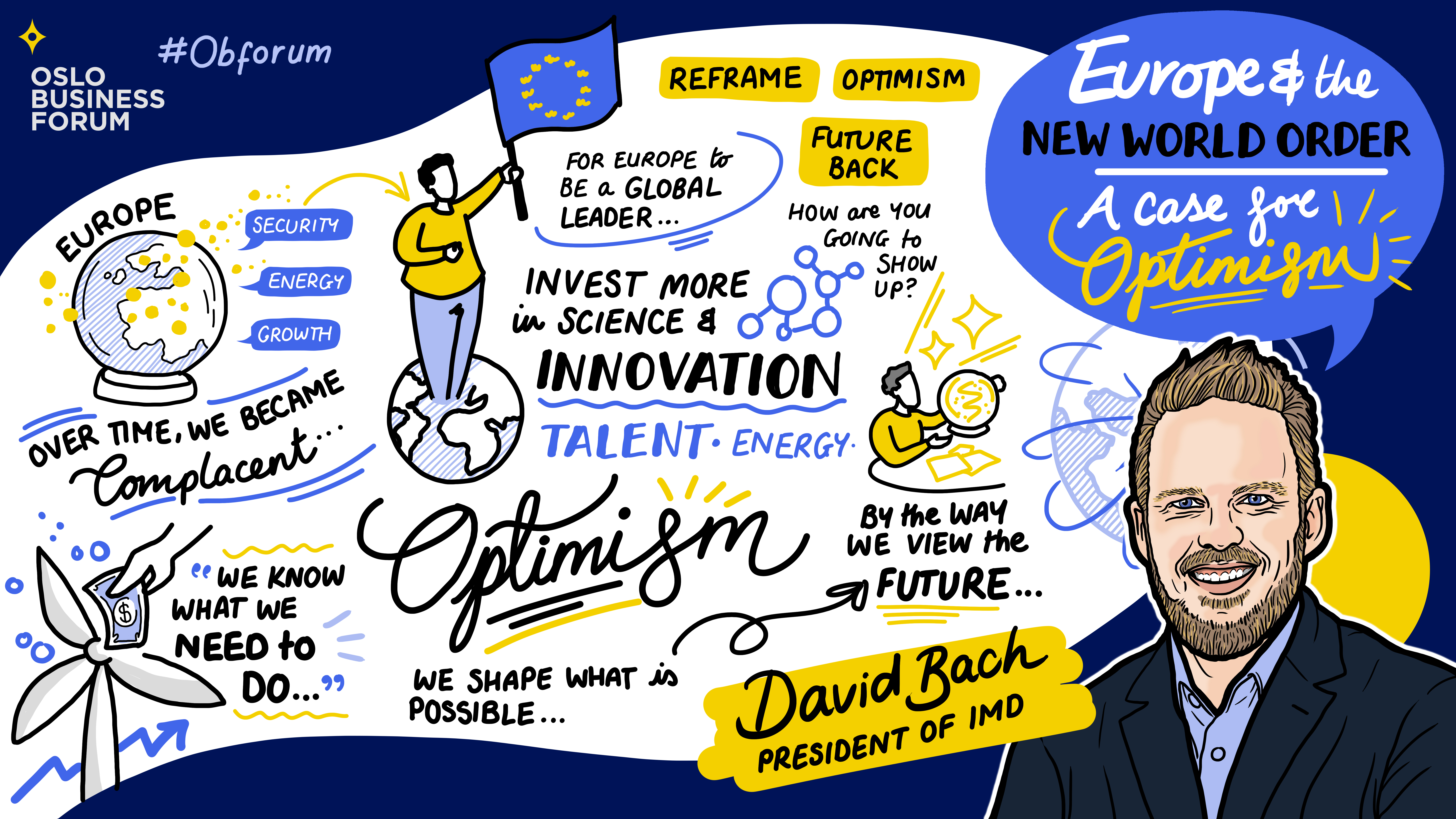
David Bach

Europe and the New World Order: A Case for Optimism

Europe faces significant challenges—from geopolitical uncertainty and energy insecurity to intensifying global competition—but David Bach argued that the continent already has the resources, talent, and capabilities to build a more prosperous and resilient future. But leaders must also cultivate optimism: the belief that progress is possible and that their choices can create it.

Key Takeaways

  • Security, sustainability, and competitiveness reinforce one another. Investments that strengthen Europe’s energy resilience, innovation, and economic growth can also help build the security and independence it needs in a changing global order.
  • Optimism can become a catalyst for action. When people believe a better future is possible, they are more willing to invest in themselves, their organizations, and their communities and drive the changes that will make that future real.
  • Leaders can actively cultivate optimism. Reframing challenges, expressing gratitude, and working “future back” from a desired outcome can help teams move from focusing on obstacles to identifying what it will take to succeed.

Ask yourself: How can I help my team remain clear-eyed about today’s challenges while building confidence in their ability to create a better future?

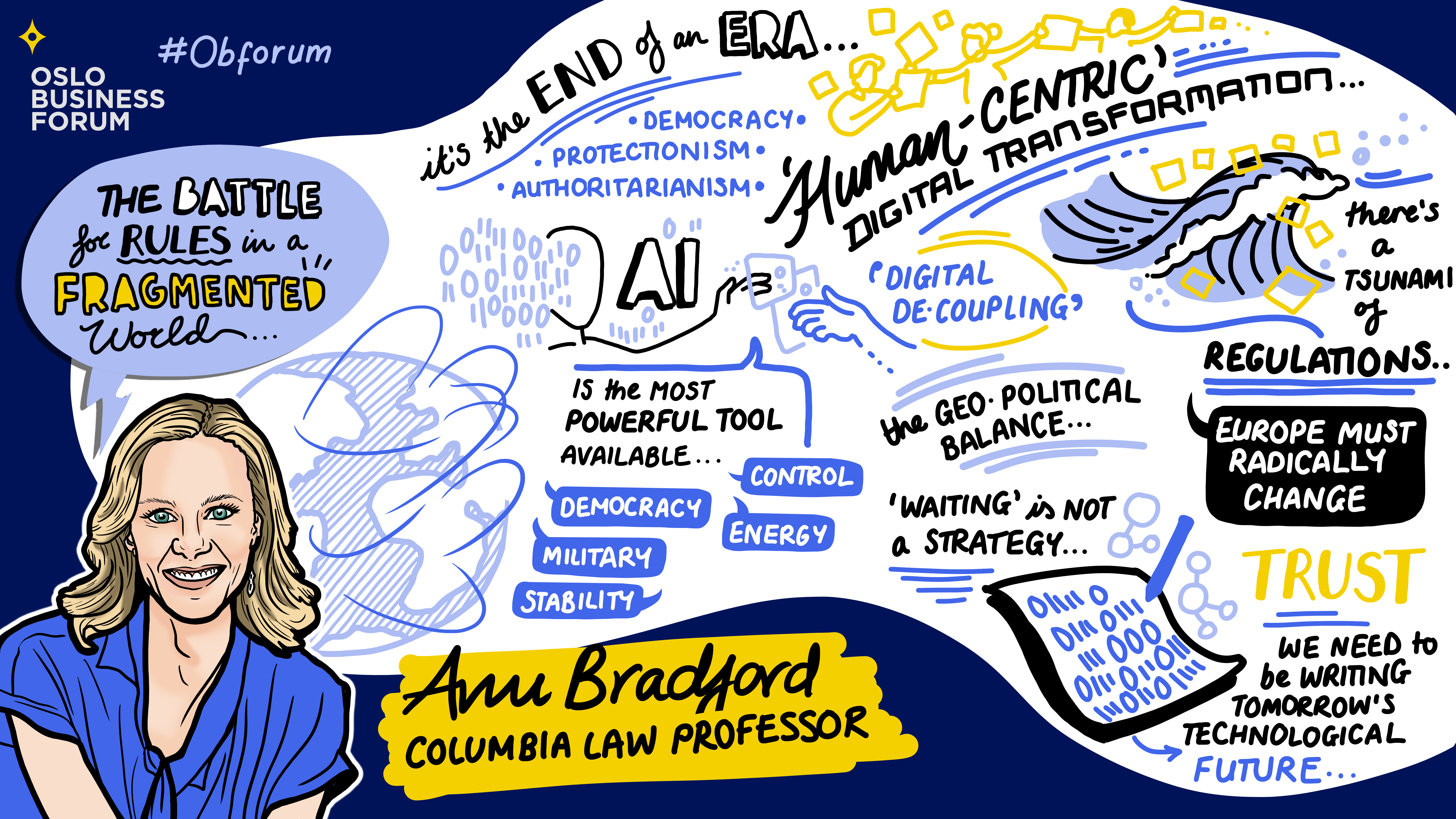
Anu Bradford

The Battle for Rules in a Fragmented World

As AI reshapes economic power, geopolitics, and democracy, Anu Bradford argued that Europe cannot simply choose between the American market-driven model and China’s state-driven approach. Instead, it must strengthen its own technological capabilities while preserving a human-centric model that protects the broader interests of society.

Key Takeaways

  • Europe needs greater technological sovereignty. As geopolitical alliances become less certain, Europe must reduce critical dependencies and build the capacity to shape its own technological future.
  • Regulation and innovation don’t have to be opposing forces. Rules can provide certainty while Europe addresses barriers to innovation, including fragmented markets, limited access to capital, attitudes toward risk, and the ability to attract global talent.
  • Europe should define the AI race on its own terms. Success doesn’t necessarily mean reaching the technological frontier first. Europe can pursue a future that captures AI’s opportunities while containing its downsides and keeps human interests at the center.

Ask yourself: What decisions can we make today to help shape an AI future that is both more competitive and more human-centric?

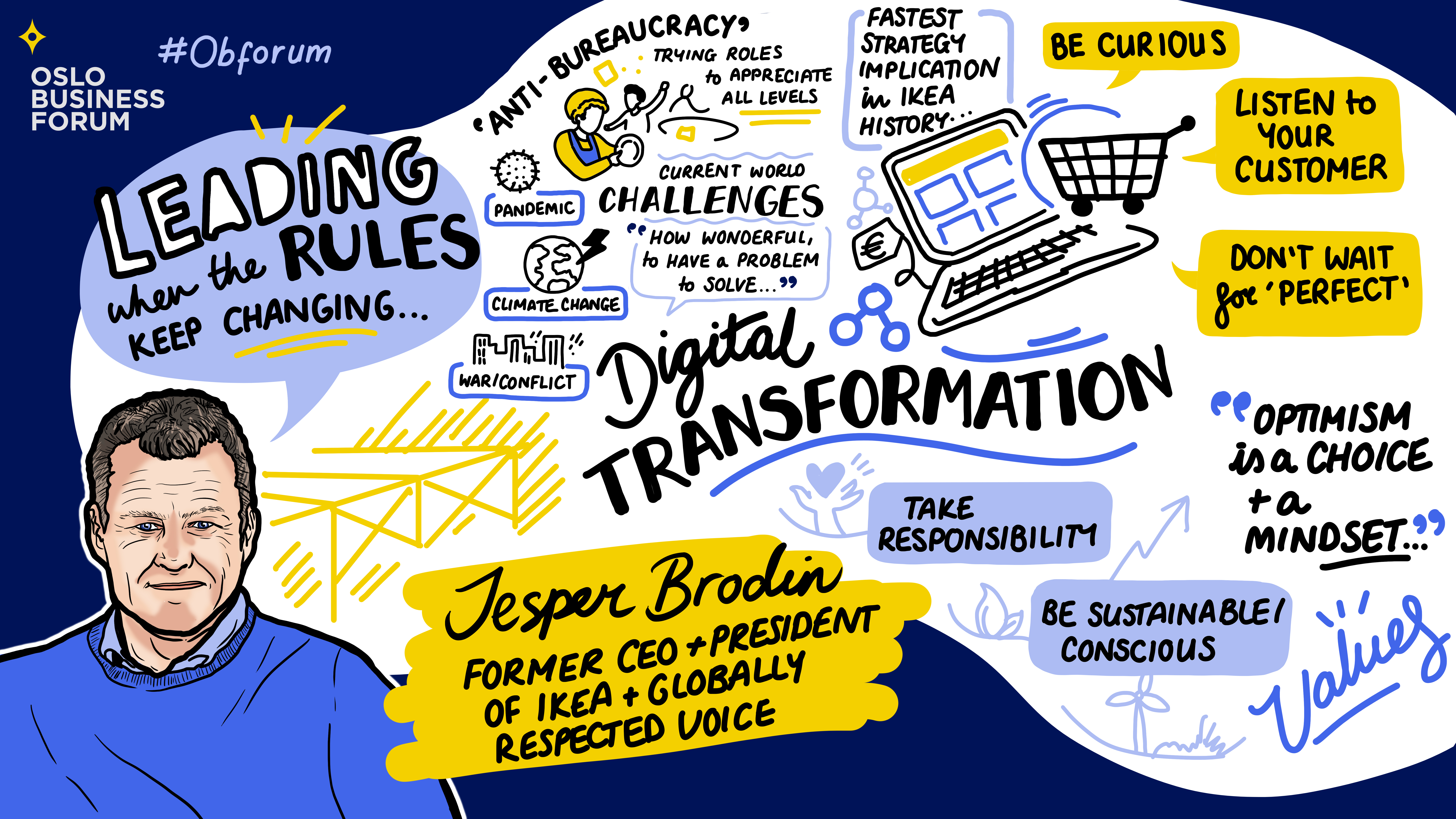
Jesper Brodin

Leading When the Rules Keep Changing

Drawing on his experience leading through digital disruption, the pandemic, geopolitical upheaval, and an ambitious sustainability transformation, Jesper Brodin challenged leaders to view uncertainty as an opportunity to build something better. Change can strengthen both performance and positive impact when leaders act before they have a perfect plan and are guided by a clear vision.

Key Takeaways

  • Success can make organizations slow to change. IKEA was late to digitalization because its existing model worked so well. Listening directly to customers helped leaders recognize how quickly expectations were changing and gave them the confidence to accelerate transformation.
  • Don’t wait for the perfect strategy. When the pandemic hit, IKEA compressed a three-year online rollout into six weeks. Take the first steps, learn as you go, and create a culture where people have permission to make mistakes.
  • Sustainability can strengthen the business model. IKEA reduced its absolute carbon footprint while growing the business. Rather than treating sustainability as something customers must pay extra for, embed it into how the business operates and creates value.

Ask yourself: Where might the pursuit of a perfect plan be preventing our organization from taking the first step toward our next transformation?

Patty McCord

A Team, Not a Family

As AI ushers in a new era of work, Patty McCord challenged leaders to rethink the rules, processes, and assumptions that may be holding them back. Drawing on lessons from building high-performance cultures, she argued that the opportunity isn’t simply to adopt new technology, but to reconsider how work gets done.

Key Takeaways

  • Question the systems you’ve inherited. Look at rules, permissions, hierarchies and processes and ask: If we were starting from scratch today, would we still do this?
  • Give people context, not control. High-performing teams need leaders who share information, set clear expectations, and trust capable people to make good decisions—not leaders who believe they have all the answers.
  • Build for where you’re going, not where you are. Envision what an exceptional team could accomplish six months from now, identify the capabilities required to get there, and have honest conversations about the people and skills you’ll need.

Ask yourself: What rule, process, or assumption would I eliminate if I were designing the organization from scratch today?

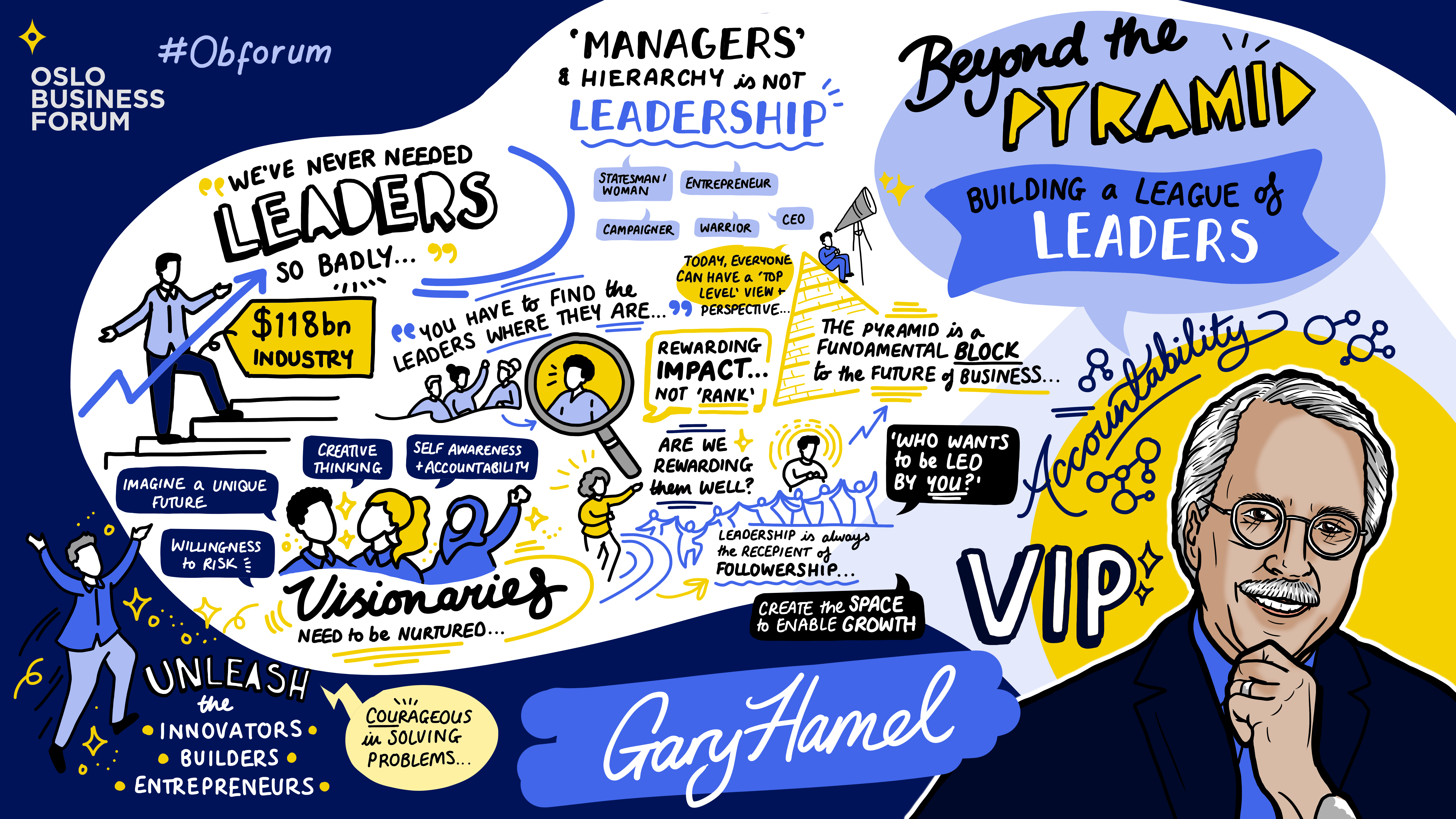
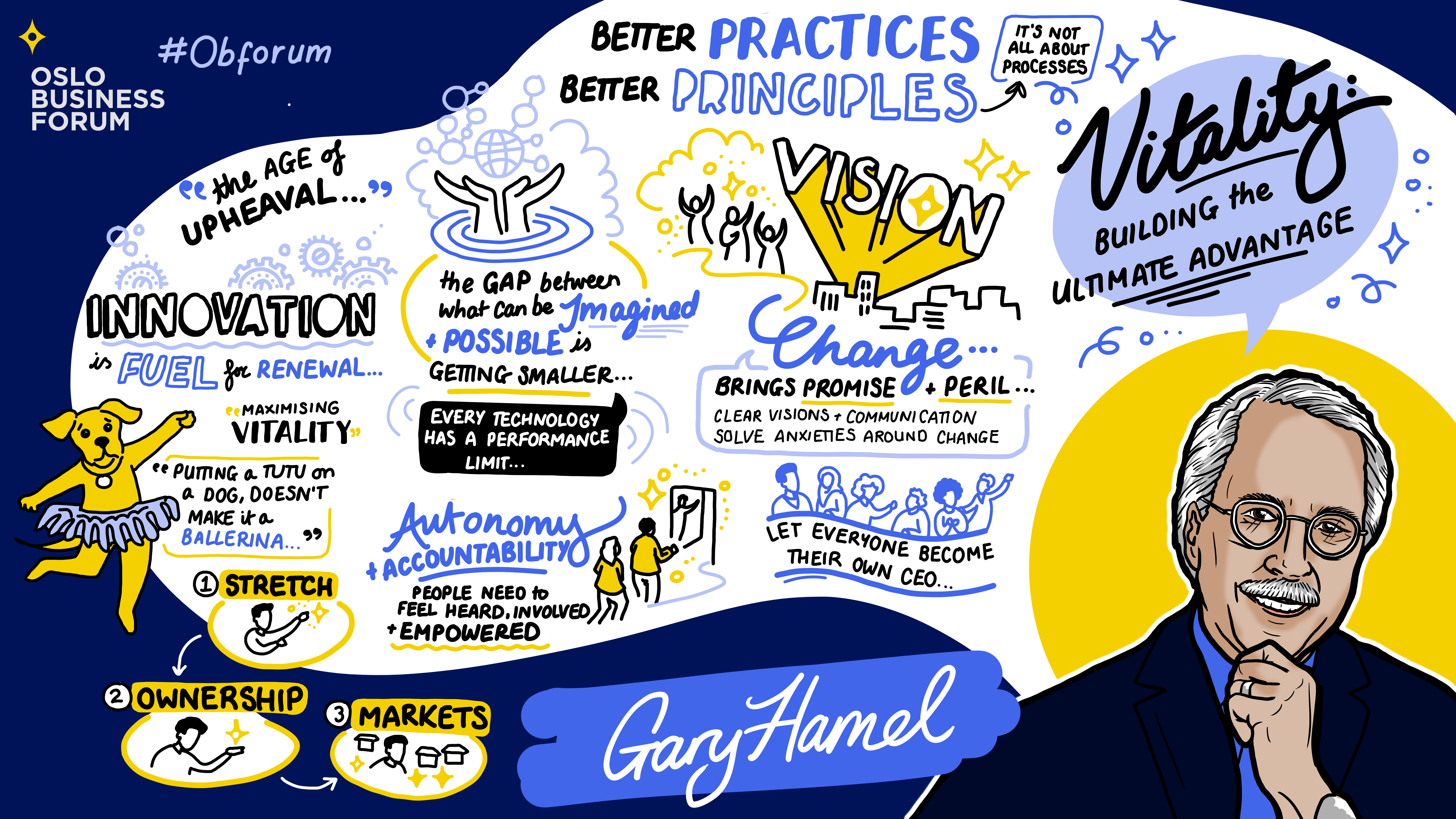
Gary Hamel

Vitality: Building the Ultimate Advantage

In a world of accelerating change, Gary Hamel argued that organizations can’t become truly adaptable, innovative, and human by adopting new tools or management practices. Leaders must challenge the deeply rooted assumptions behind how organizations are run, shifting from a model built around control and efficiency toward one that maximizes human contribution.

Key Takeaways

  • Challenge the assumptions behind your management practices. Organizations often try to become more agile or innovative by changing processes alone. Lasting change requires questioning fundamental beliefs about who holds power, how decisions are made, and what people are capable of.
  • Treat people as resourceful—not as resources. Instead of viewing employees as instruments for achieving organizational goals, build an organization that gives people the autonomy, information, skills, and accountability to think and act like owners.
  • Experiment with management itself. Identify where bureaucracy is getting in the way, then test small changes to established systems—from performance management to policies—and learn from the results.

Ask yourself: Which long-held assumption about how our organization is managed deserves to be challenged?

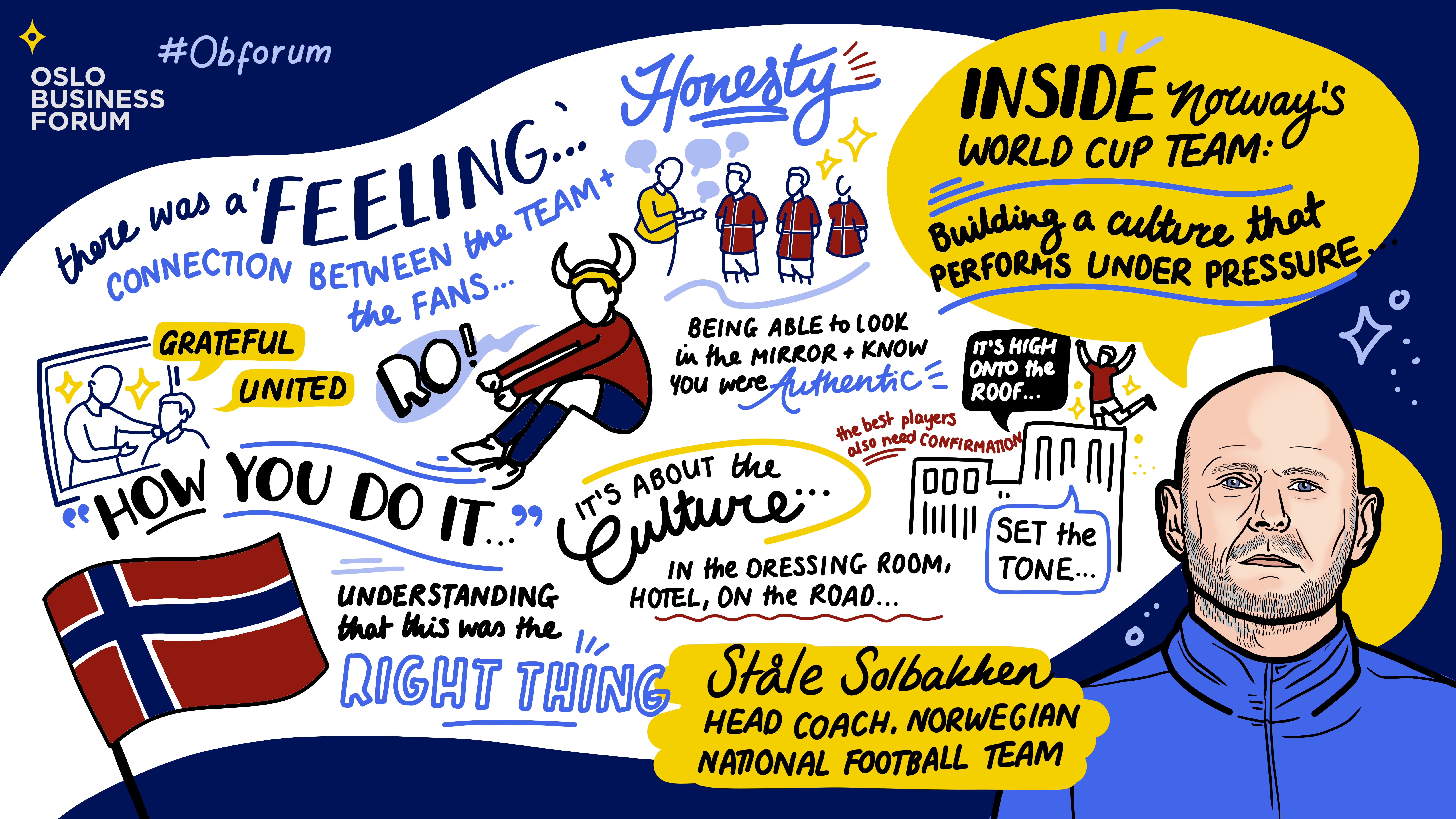
Ståle Solbakken

Inside Norway’s World Cup Team: Building a Culture That Performs Under Pressure

Fresh from Norway’s historic World Cup run, Norwegian National Team coach Ståle Solbakken shared lessons in leadership that extend far beyond football. Building a high-performing team, requires leaders to make difficult decisions with conviction, create a culture where individuals strengthen the collective, and give people the feedback they need to reach their potential.

Key Takeaways:

  • Make decisions for the team. Leaders inevitably make choices that disappoint people. Solbakken’s test is whether you can look yourself in the mirror knowing you made the decision you truly believed gave the team its best chance to succeed.
  • Your biggest stars carry the greatest responsibility for culture. Talent alone doesn’t create a winning team. Solbakken expects influential players to help others because their words and behavior can shape the team as powerfully as a coach’s.
  • Give high performers both honesty and affirmation. The best players—and the best employees—need to hear what they’re doing well. Their drive to improve makes direct, individualized feedback essential to helping them reach an even higher level.

Ask yourself: Are your most influential people using their talent and influence to elevate the performance of the entire team?

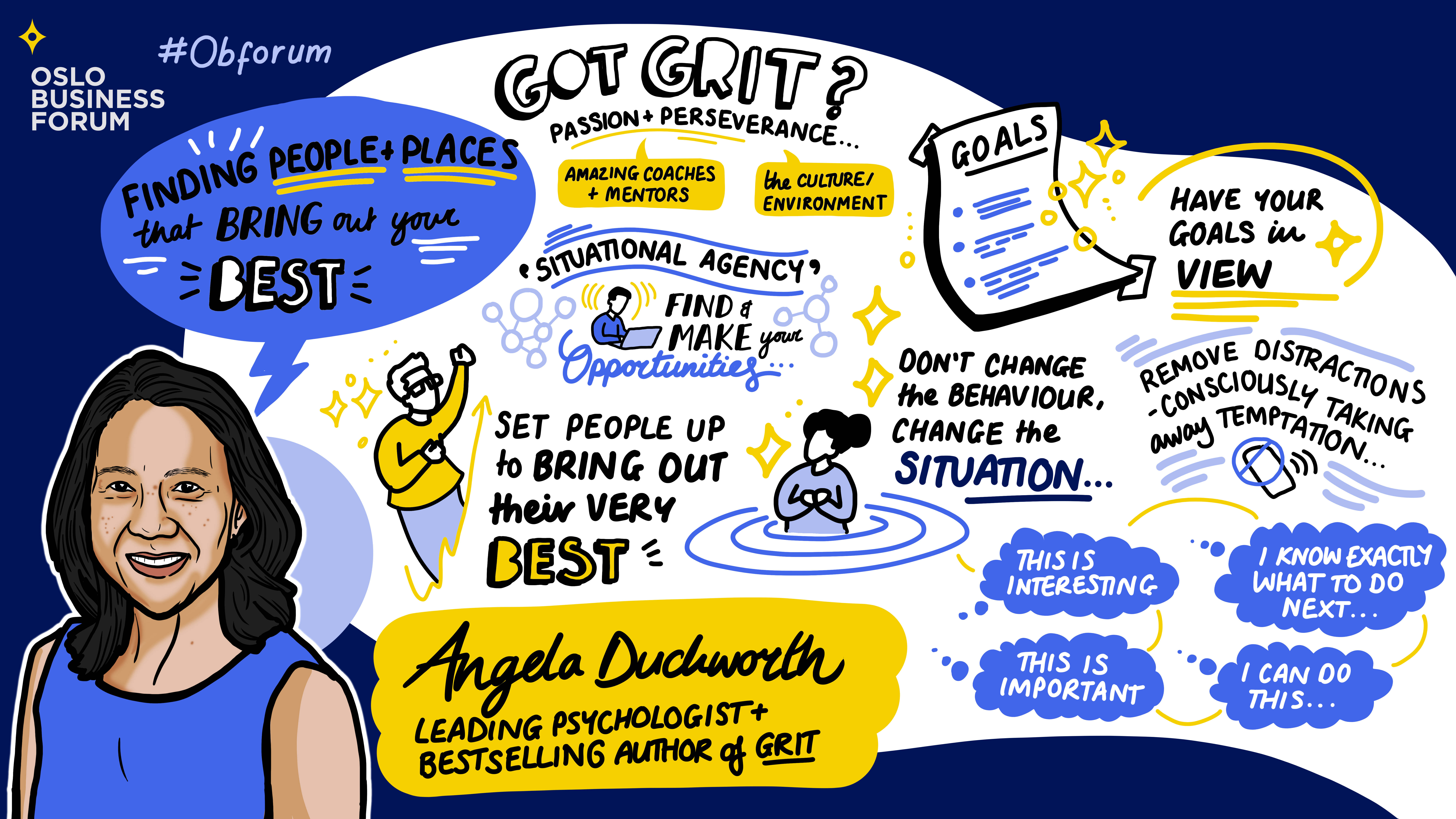
Angela Duckworth

Finding the People and Places That Bring Out Your Best

Grit may help explain why high achievers persevere, but Angela Duckworth argued that individual effort is only part of the equation. Reaching our potential also depends on the environment around us, and great leaders deliberately create spaces that make it easier for people to bring their best.

Key Takeaways:

  • Change the situation, not just the person. When people fall short of their goals, the instinct is often to prescribe more effort or willpower. Instead, consider shaping the environment to help the thoughts and behaviors that drive performance come more naturally.
  • Create the conditions for high achievement. High performers tend to have a few situational advantages: physical environments that support their goals, peers who make them stronger, mentors who offer guidance, and cultures that combine high expectations with meaningful support.
  • Help people exercise situational agency. Individuals can proactively improve the environment around them, from removing distractions to finding the right peers and mentors. Leaders have an added responsibility to help people find and create the “sweet spots” where their potential can flourish.

Ask yourself: What could you change about your team’s environment that would make high performance easier?

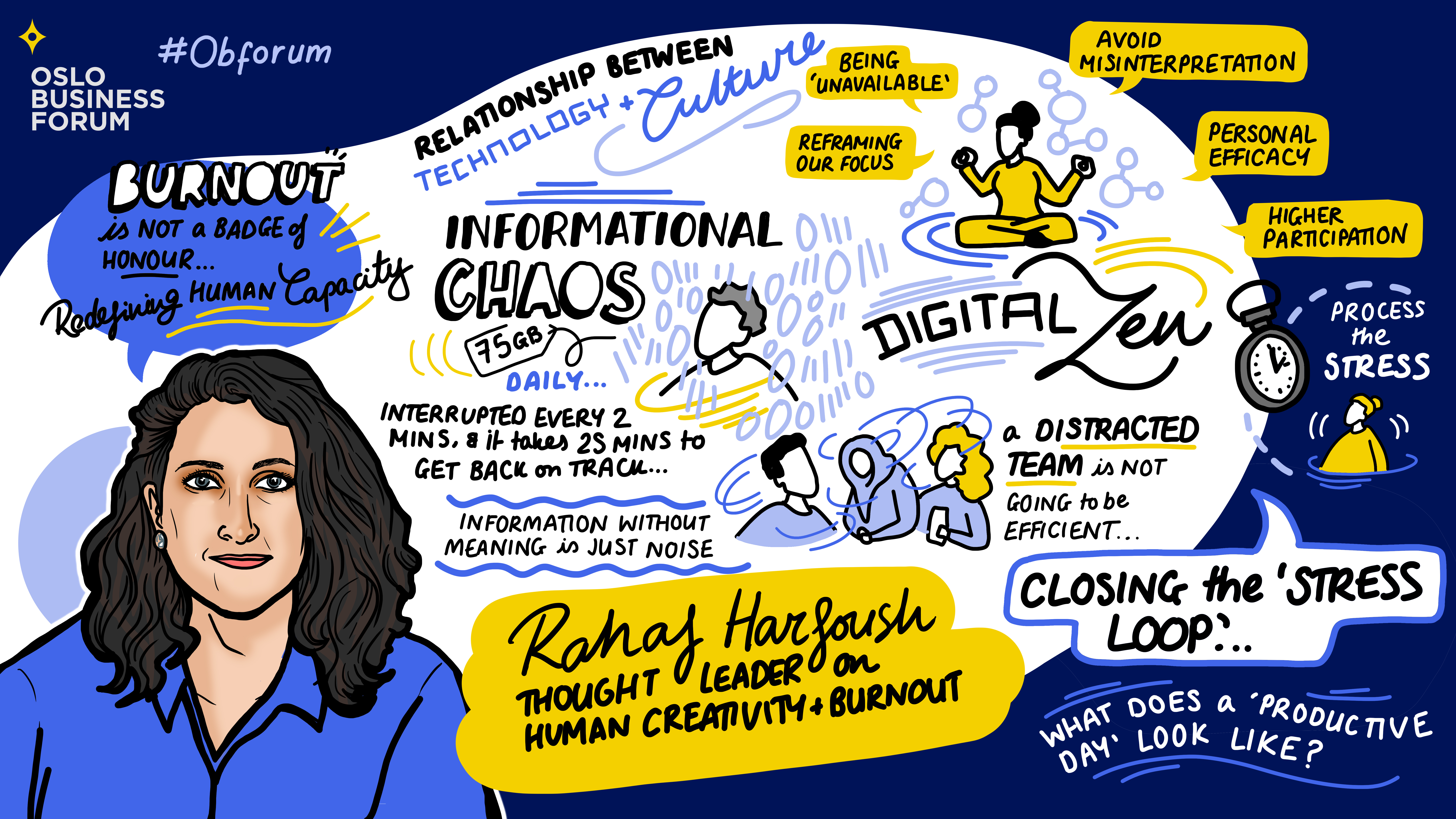
Rahaf Harfoush

Burnout Is Not a Badge of Honor: Redefining Human Capacity

As information and technology proliferate, digital anthropologist Rahaf Harfoush argued that leaders must become more intentional about how technology shapes the way people think, work, and perform. “Digital Zen” reframes focus, recovery, and human-centric technology as competitive advantages in a volatile world.

Key Takeaways:

  • Protect focus as a performance capability. Technology has created cultures that reward quick responses, even as we ask people to think more strategically and solve complex problems. Leaders need to create space for uninterrupted thinking and deep work.
  • Treat recovery as part of high performance. Beyond just draining energy, burnout can erode empathy, confidence, decision-making, and collaboration. Organizations must build in small, consistent opportunities for recovery.
  • Design your tech culture intentionally. Every technology embeds assumptions about what productivity looks like. Leaders should define high performance first, then evaluate whether their tools and practices reinforce—or undermine—the culture they want to create.

Ask yourself: Is the way your organization uses technology helping people do their best thinking or unintentionally making that work harder?

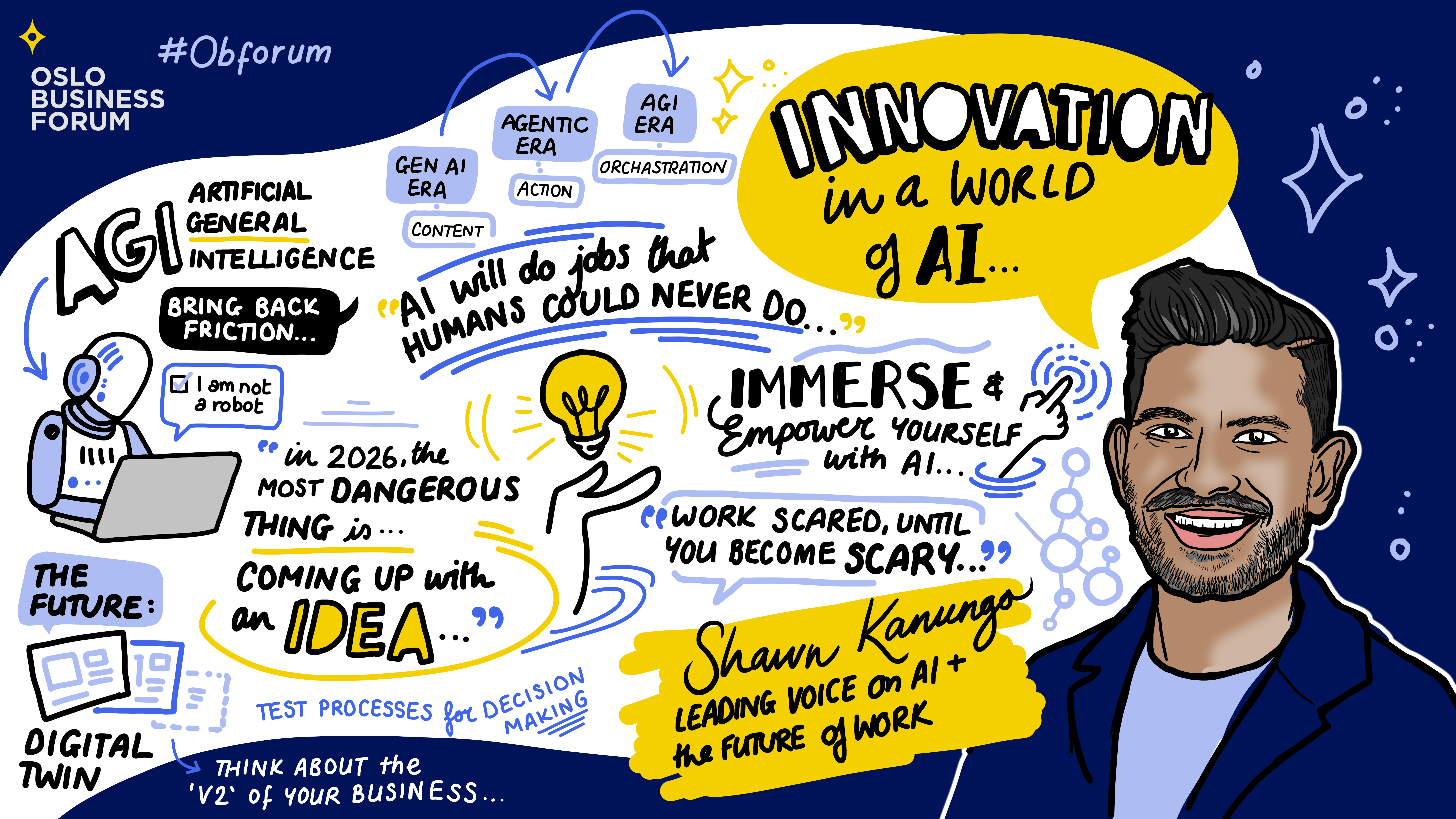
Shawn Kanungo

Innovation in a World of AI

As increasingly autonomous AI transforms what organizations can create and execute, innovation strategist Shawn Kanungo challenged leaders to do more than add new technology to old ways of working. The bigger opportunity is to rethink organizations from the ground up, doubling down on bold ideas, human experiences, and a willingness to disrupt ourselves.

Key Takeaways:

  • Don’t bolt AI onto the organization you already have. Imagine a “V2” of your business: if you could start from zero with today’s technology, what would you automate, eliminate, or fundamentally redesign?
  • Choose where to add humanity. As technology raises expectations for convenience, organizations risk getting stuck in the “black hole of mediocrity.” Some experiences should become seamless and automated; others should deliberately slow down to become more meaningful, memorable, and human.
  • Think beyond conventional wisdom. AI can synthesize an extraordinary amount of existing knowledge, but the human advantage lies in pursuing “dangerous ideas” that may seem unreasonable. That requires leaders to let go of assumptions built through past success.

Ask yourself: If you rebuilt one part of your organization from zero today, what would you automate, eliminate, or make more human?

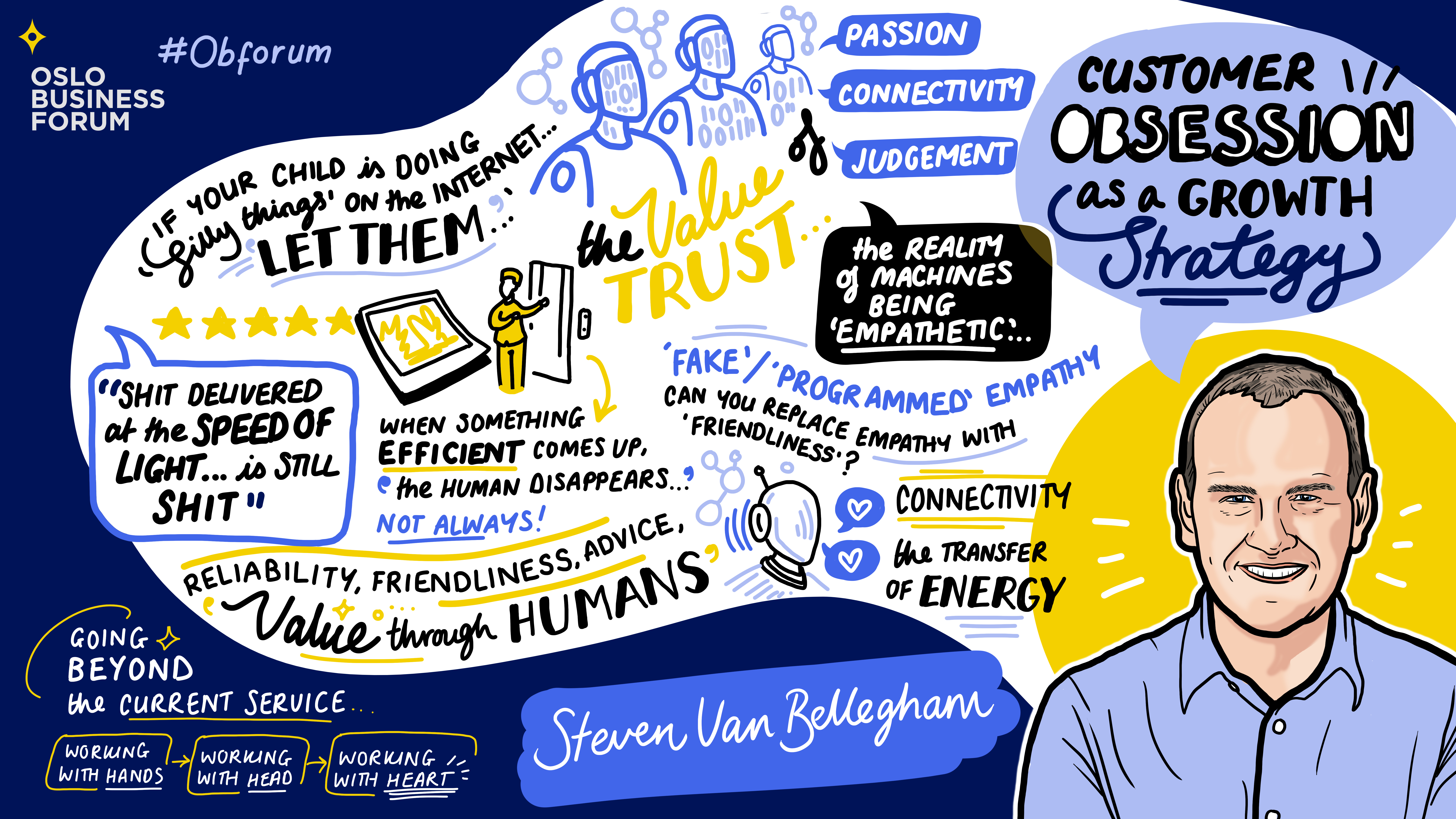
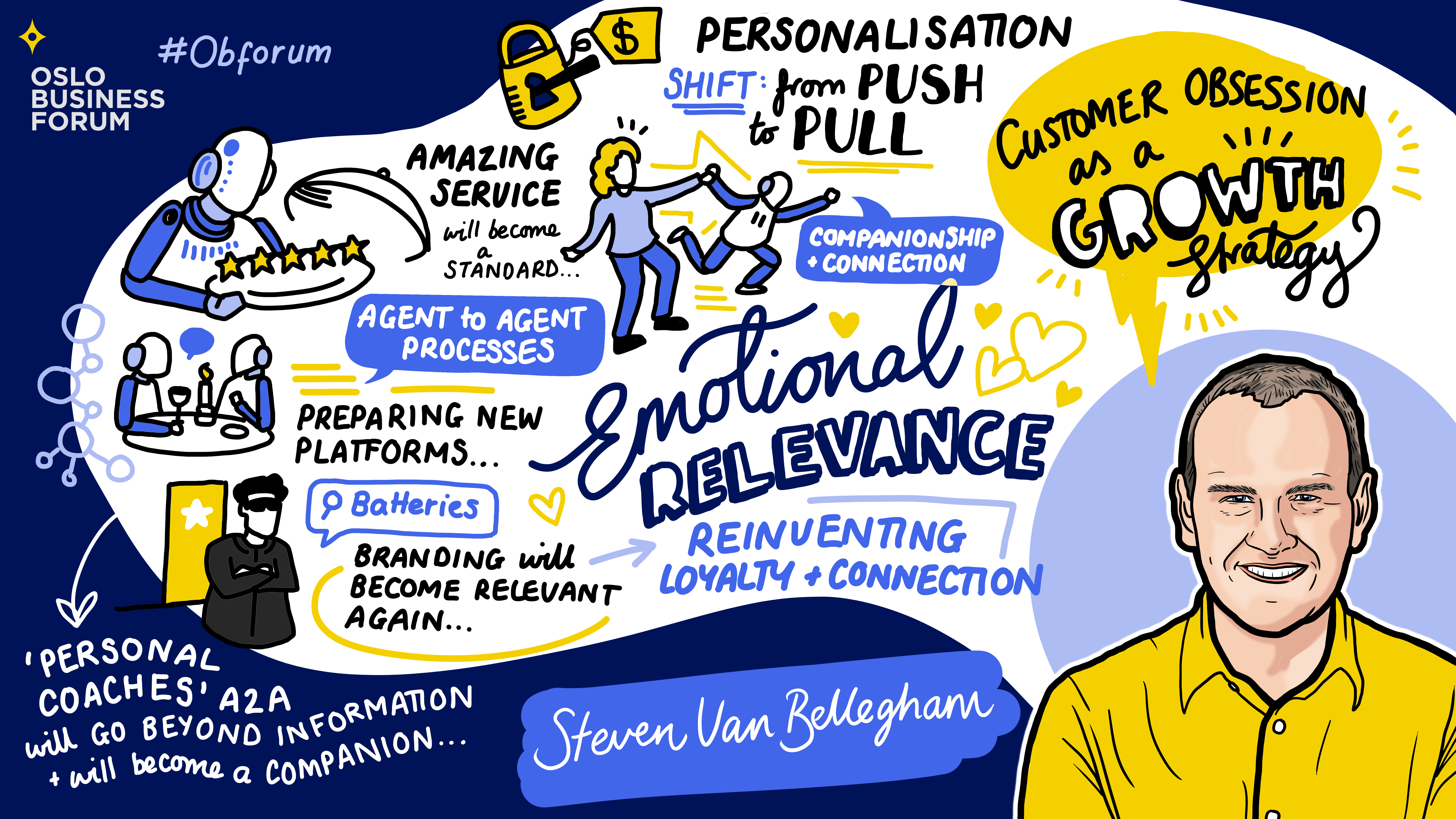
Steven Van Belleghem

Customer Obsession as a Growth Strategy

As AI makes customer service faster, easier, and increasingly friction-free, Steven Van Belleghem argued that exceptional service is becoming a basic expectation rather than a differentiator. To build lasting loyalty, companies must look beyond transactional efficiency and create deeper relevance, emotional connection, and a genuine sense of belonging.

Key Takeaways:

  • Expect great service to become a commodity. AI will make personalized, frictionless experiences standard. Companies still need to deliver them, but guard against customers becoming loyal to the processes rather than to the brands behind them.
  • Move from transactional to transformational loyalty. Convenience creates transactional loyalty; becoming a meaningful partner in customers’ lives creates transformational loyalty. Use technology to provide the expertise, guidance, and experiences that help customers make progress.
  • Create emotional relevance that technology can’t commoditize. Deep loyalty emerges when customers identify with a brand and feel they belong. In an AI-driven world, companies must intentionally invest in moments that strengthen relationships, even when the value is hard to measure.

Ask yourself: As exceptional service becomes easier for everyone to deliver, what will make customers actively choose and stay loyal to your brand?

Seth Godin

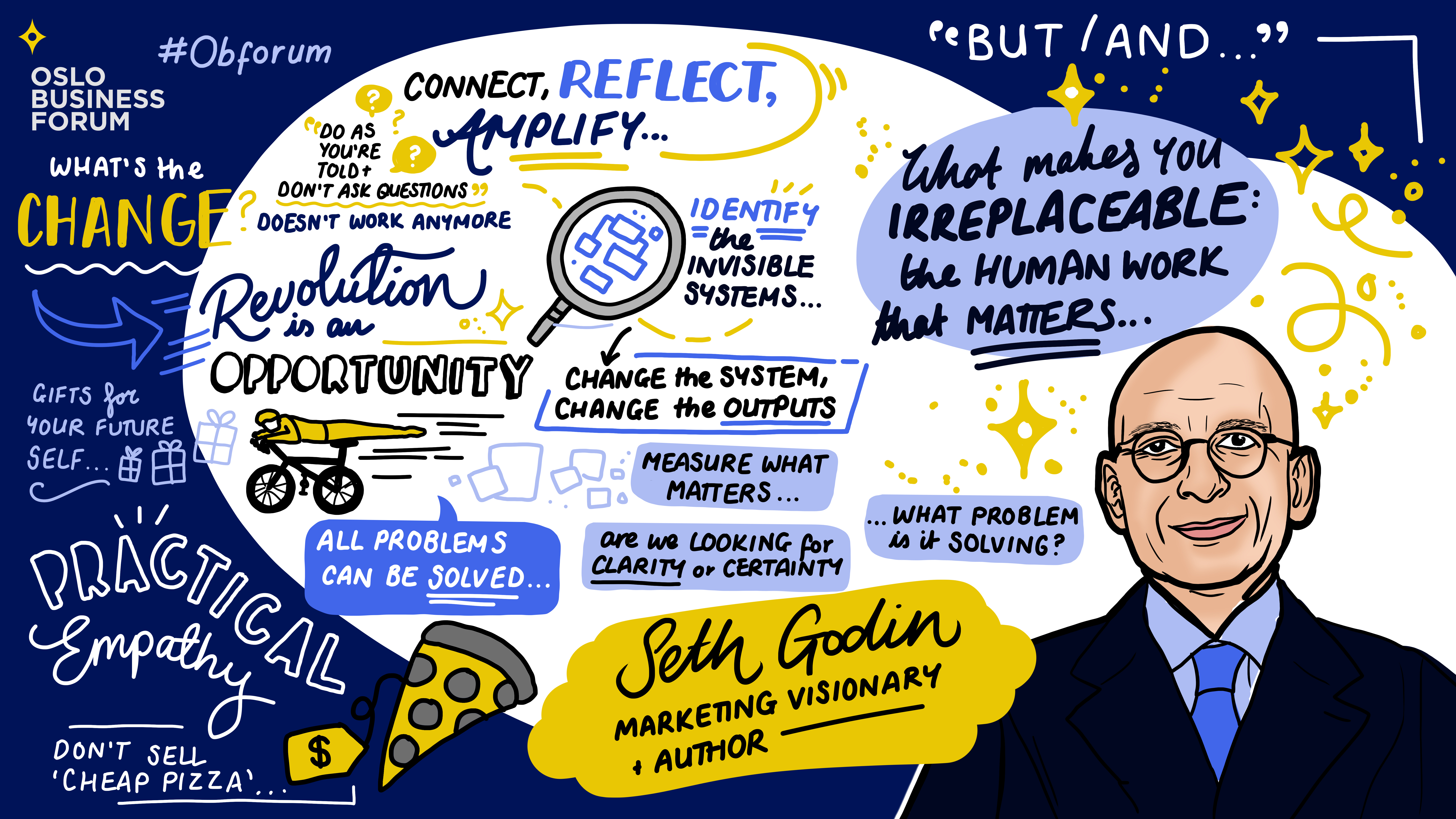
What Makes You Irreplaceable: The Human Work That Matters

AI may be the biggest technological revolution of our lifetime, but Seth Godin argued that the biggest advantage isn’t greater efficiency. As technology takes over more tasks, human value needs to come from seeing problems differently, challenging the systems that keep us stuck, and taking responsibility for creating meaningful change.

Key Takeaways:

  • Upskill people instead of deskilling work. AI makes it increasingly easy to turn jobs into tasks that humans perform at the direction of technology. Do the opposite: Give people ownership, the ability to solve problems, and responsibility for decisions.
  • See the system and question it. Systems are the invisible forces that make things feel “the way they are.” Leaders can create new possibilities by defining the problem clearly and changing the systems producing the outcomes they no longer want.
  • Choose clarity over certainty. Instead of waiting until success is guaranteed, get clear about three questions: Who is it for? What is it for? What’s in it for them? Use the answers to move forward even when the outcome is uncertain.

Ask yourself: What problem could you solve if you stopped accepting the system around it as fixed?

Steven Bartlett

Brand, People, and Mindset: Lessons from the Modern CEO

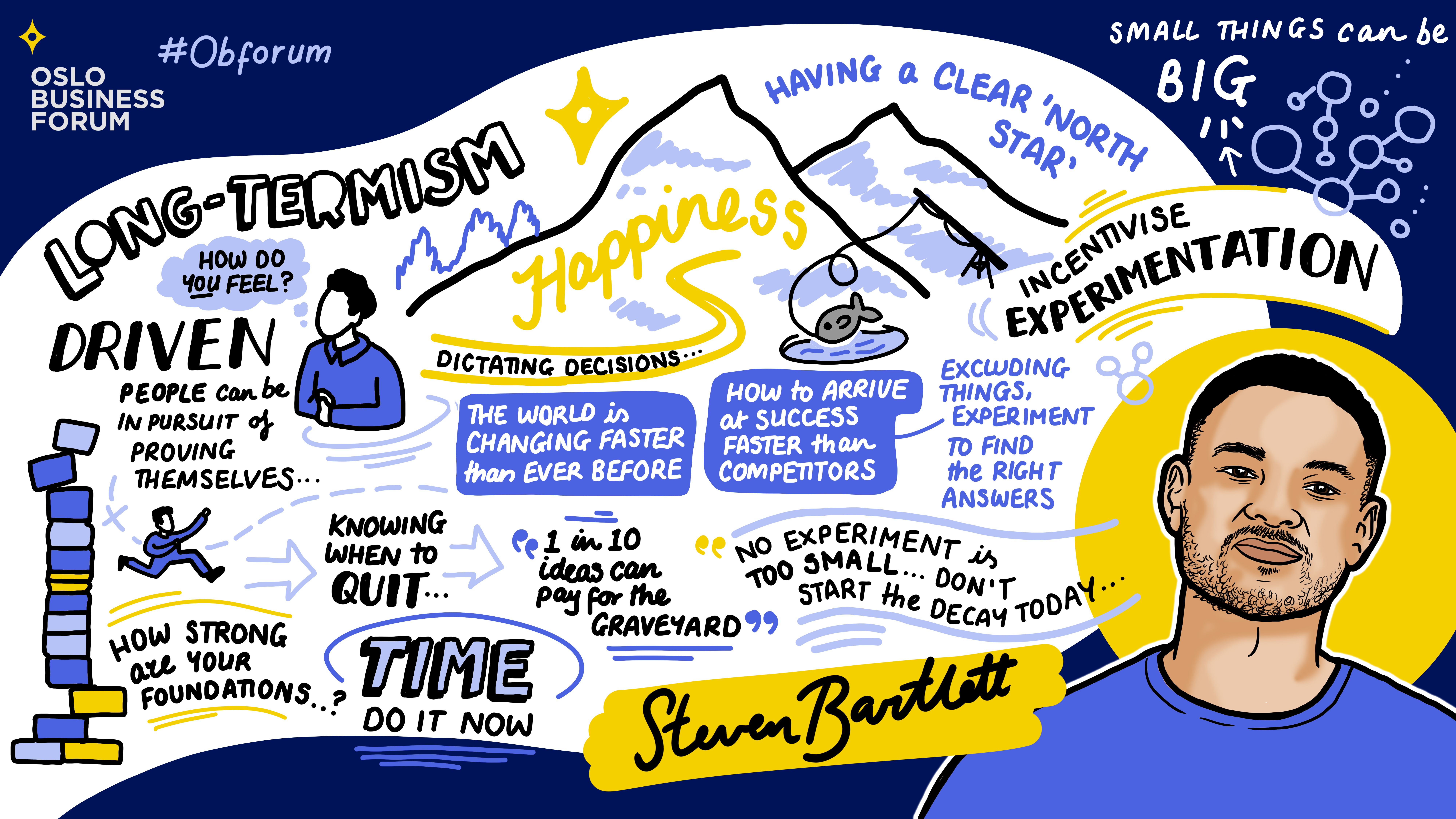
In a conversation weaving success, experimentation, and happiness, entrepreneur and “The Diary of a CEO” host Steven Bartlett challenged leaders to think beyond immediate results. Lasting advantage, he argued, comes from extending our horizons, experimenting faster than the world changes, and investing in the small, distinctly human things that compound over time.

Key Takeaways:

  • Extend your time horizon. Short-term thinking changes how we build. Thinking further ahead encourages decisions that create stronger foundations—not just faster results.
  • Build a culture that rewards experimentation. In a rapidly changing world, the advantage goes to organizations that can test, learn, and adapt faster. Treat failure as valuable information that brings the organization closer to what works.
  • Invest in what is “irreplaceably human.” As AI makes everything easier to automate, bet on what won’t change: our need for human connection. Look for opportunities to deliberately strengthen the relationships and experiences that make people feel something.

Ask yourself: What would you do differently today if you were building your organization for the next 50 years instead of the next quarter?

Want to See and Use All Photos?

Our photographer has captured numerous wonderful moments from the event. They’ve also taken many great shots from our dear event guests. Feel free to take a look at our gallery and use our photos! Just give credits to ©Oslo Business Forum when sharing.

Photo Gallery