Here are 12 of the most impactful leadership learnings from Oslo Business Forum 2026: The Human Edge, to help you shift your ways of thinking and transform your leadership.
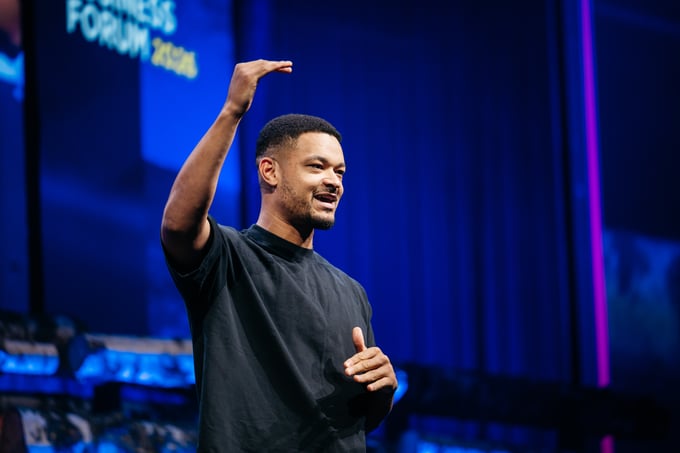
Learning #1: Extend your time horizon.
Steven Bartlett is the voice behind the world’s #1 business podcast, The Diary of a CEO, where he brings raw honesty, practical wisdom, and unfiltered insights to inspire leaders to build brands, cultures, and businesses that people truly believe in.
At Oslo Business Forum, Steven explored the idea of long-termism and how extending our time horizons can change the decisions we make today.
When leaders expect to steward something for decades, they're more likely to invest in value that may not be immediately visible. Consider companies that have made long-term investments in infrastructure, technology, and capabilities well before those investments produced obvious returns.
Shorter time horizons create different incentives. When speed is the overriding objective, leaders focus on what they can see and measure right now at the expense of what will endure. Steven believes a longer horizon provides a more useful filter.
"How would we build differently today if we expected this organization to matter 50 years from now?"
For leaders navigating accelerating change, his message may seem counterintuitive, but it’s necessary: Think further ahead. Experiment faster. Pay closer attention to the small things. And invest in what won't change.

Learning #2: Every high performer needs their leader.
Angela Duckworth is a psychologist and bestselling author known for her research on non-IQ competencies, including self-control and grit, as predictors of success.
At Oslo Business Forum, she explained how the outside game—environments, relationships, and cultures, can help individual effort grow into exceptional performance.
World-class performers tend to find themselves in situations that bring out their best. They have peers who challenge them, coaches who guide them, physical environments that reinforce their goals, and cultures that combine high expectations with meaningful support.
Angela's research has repeatedly shown the importance of mentors who offer experience, perspective, and guidance that can help people achieve their potential.
"Imagine if mentoring was an expected quality of every leader in your organization."
She encouraged leaders to normalize mentorship inside their organizations. One practical way to do it? Make yourself available for conversations that can evolve into deeper developmental relationships.
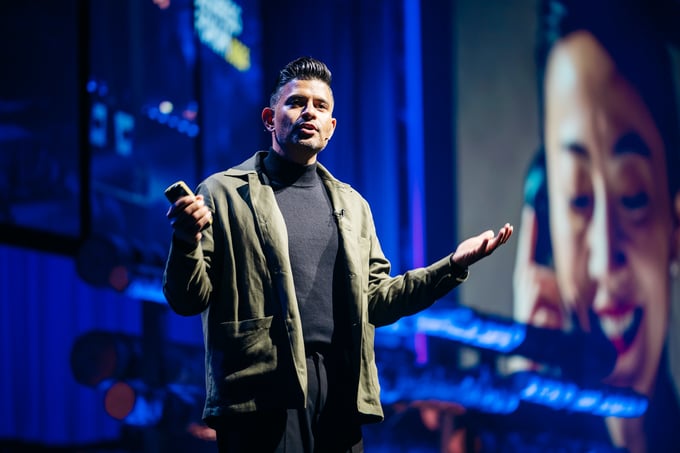
Learning #3: Work scared until you become dangerous.
Shawn Kanungo is a leading speaker on innovation and AI who helps leaders understand what AI changes at the strategic level, and what it demands in practice.At Oslo Business Forum, Shawn took leaders through a rapid-fire tour of generative AI, autonomous agents, and artificial general intelligence. He argued that technology has reached a point where leaders must stop asking how AI can make their organizations incrementally better and start asking what they would build if they could start again.
In this rapidly evolving era, Shawn doesn't want leaders to be paralyzed by fear. He wants them to respond with curiosity. If you feel intimidated by AI, immerse yourself in it. Ask: Now that we have this extraordinary technology, what more can we create?
That question could make you dangerous—in a good way. "AI will never be able to come up with a dangerous idea,” Shawn said. “And the world was built on dangerous ideas."
AI is extraordinarily capable of analyzing what already exists. The human edge comes from imagining what doesn't yet exist.
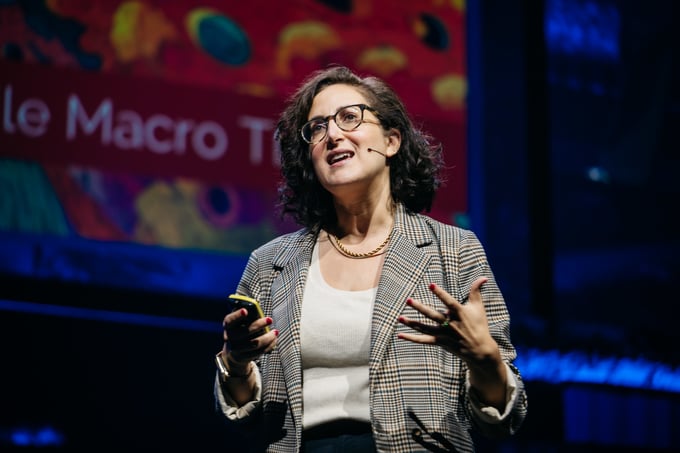
Learning #4: Make the invisible visible.
Rahaf Harfoush is a digital anthropologist, bestselling author, and researcher who draws on her global experience to challenge traditional measures of success and inspire leaders to embrace balance, creativity, and human potential.
At Oslo Business Forum, Rahaf argued that the collision between technology and culture is creating informational chaos. The solution is an approach she calls Digital Zen: a mindset that combines a human-centric tech strategy with recognition that well-being can be a competitive advantage.
Apps, algorithms, dashboards, and devices contain assumptions about how people should spend their time, what they should pay attention to, and what success looks like. When organizations adopt those technologies, they also risk importing those assumptions. That makes technology selection a cultural decision.
Rather than allowing tools to establish norms by default, Rahaf urged leaders to define their beliefs manifesto:
-
How should people spend their time?
-
What do high performers need?
-
What does productive work really look like?
The goal is to make the invisible visible: rather than letting technology determine culture by default, restore agency to the organization.
.jpg?width=675&height=450&name=55533667764_cfec8ec1d7_k%20(1).jpg)
Learning #5: Make the decision you can live with.
Ståle Solbakken is the Head Coach of the Norwegian National Football Team. In 2020, Ståle took charge of the team with a clear idea of the culture he wanted to build. Results didn't immediately follow, but inside the team, the belief remained.
At Oslo Business Forum, Ståle took leaders inside Norway’s 2026 World Cup journey.
During the tournament, Ståle faced a decision that could easily have sealed the team’s fate. Norway had advanced from its group and was scheduled to face France, one of the strongest teams in the competition. Rather than fielding his best lineup, Ståle wanted to rest almost the entire team.
The decision carried obvious risk, but for Ståle, the leadership test wasn't whether everyone would approve. It was whether he could look himself in the mirror and know he had made the decision that gave Norway its best chance to succeed.
"You should sit there with a clear conscience that you have done what you think is right and not try to please someone."
Leaders are surrounded by stakeholders to please, but trying to satisfy each makes hard decisions even harder. Ståle's solution is straightforward: Listen to the people whose judgment matters. Make the decision you believe in. Accept the consequences.
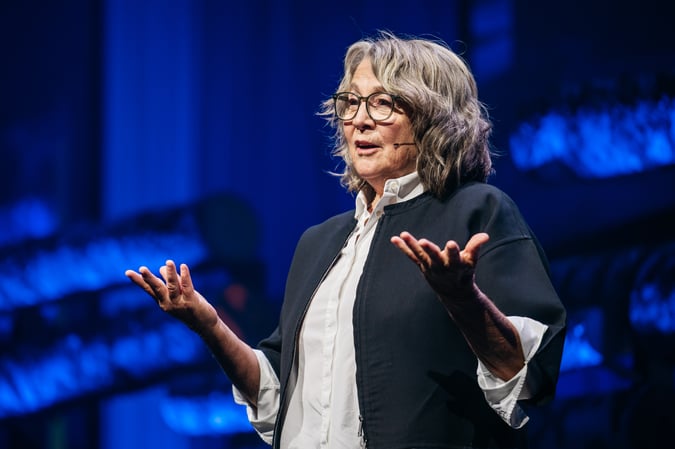
Learning #6: Culture is a system built into your organization.
Patty McCord is the former Chief Talent Officer of Netflix and architect of the Netflix Culture Deck, hailed as one of the most important contributions to modern business.
At Oslo Business Forum, Patty demonstrated how building a team of empowered, accountable, and outcome-focused adults can supercharge an organization's results.
When Patty joined Netflix in 1998, she started with a simple ambition: build a company filled with talented people doing great work together. What followed became one of the most influential experiments in organizational culture.
As Netflix evolved, Patty and her colleagues repeatedly challenged conventional assumptions about hiring, performance, feedback, and management. The resulting Netflix Culture Deck became famous beyond the company, documenting a system they developed over time.
"I realized … I wasn't talking about a PowerPoint presentation. I was talking about a system we had built in the organization."
Today, as AI promises to transform work, leaders have an opportunity to ask a question that can directly influence their culture: If we were building our company from scratch, would we still work this way?
Learning #7: Take the first step before you have the perfect strategy.
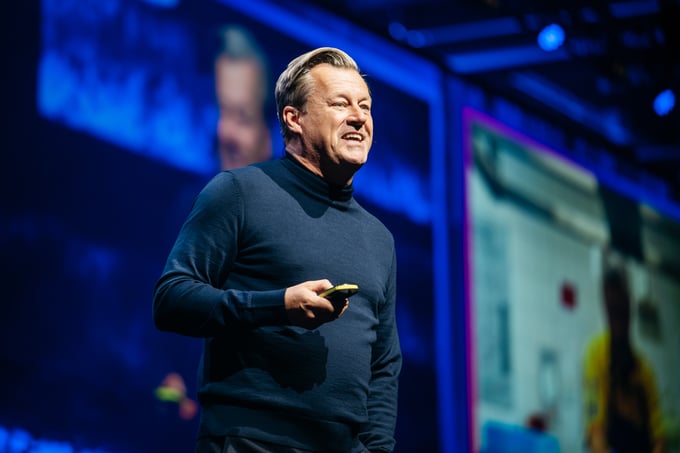
Jesper Brodin is the former CEO and President of Ingka Group, the world's largest IKEA retailer, where he led one of the most significant transformations in modern retail.
At Oslo Business Forum, Jesper shared the lessons the experience taught him and how, amid the relentless pressure to solve today's problems, leaders must have the courage and optimism to imagine a better future.
When the company embarked on its transformation, IKEA had decades of technology, logistics, distribution, and service infrastructure to untangle. Jesper described the work as "re-piping" the IKEA network.
Then the pandemic arrived. At the time, IKEA had a three-year plan to shift from a store-based to an omnichannel model. Suddenly, it had weeks. The team responded, and within six weeks, all of its markets were operating online. What had been planned as a multi-year transformation accelerated dramatically because circumstances made waiting impossible.
For Jesper, the experience reinforced a principle that became central to his leadership: "Take the first steps, don't aim for the perfect strategy, but most of all, listen to your customers."
Learning #8: Decide which race you want to win.
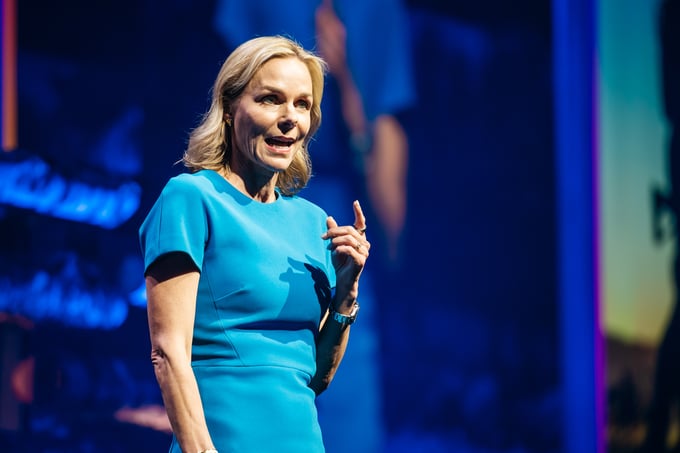
Anu Bradford is a professor of law and international organization at Columbia University and an expert on international trade, digital regulation, and geopolitical competition.
At Oslo Business Forum, Anu argued that the AI race is a contest over what kind of technological future societies want to create—and Europe has an opportunity to strengthen its capabilities while preserving a distinctly human-centric approach.
Before accelerating our AI investments, however, we must ask a fundamental question: What are we racing toward?
"The race I want us to win is the race that we are ambitious of harnessing all the tremendous opportunities that AI brings about for the benefit of our citizens," Anu said.
Anu doesn’t believe technological leadership is meaningful because a model is larger, faster, or more powerful. She sees the real test as what the technology enables people, societies, and organizations to become.
Business leaders have an opportunity to define success before joining the race. Be clear about what you're racing toward and who will ultimately benefit.
Learning #9: Move from perfection to connection.
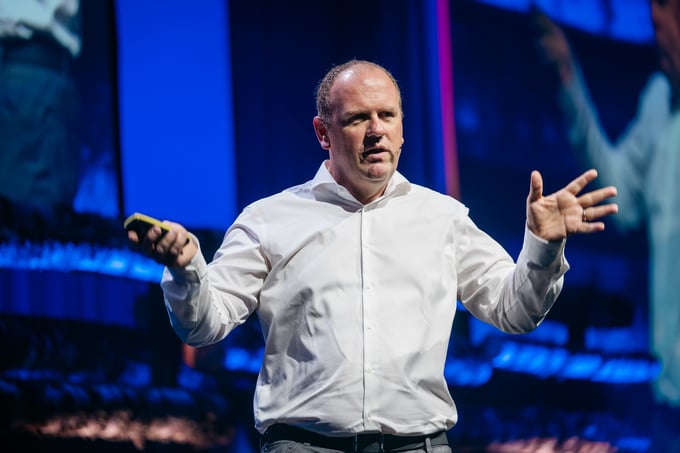
Steven Van Belleghem is an entrepreneur, academic, speaker, and author who helps leaders turn customer obsession from an aspiration into a daily reality.
At Oslo Business Forum, Steven described how AI is dramatically improving customer service. That sounds like good news, but he sees a catch: if AI makes exceptional service accessible to everyone, exceptional service stops being exceptional.
The answer to this problem lies in something technology can't manufacture: connection.
"The moment that all transactions become perfect, connection becomes more important than perfection."
Steven shared three opportunities for companies to create connection: transactional loyalty, transformational loyalty, and deep loyalty. The strongest customer experiences contain all three:
- Transactional loyalty makes the customer's life easier.
- Transformational loyalty makes the customer's life better.
- Deep loyalty gives the customer an emotional reason to stay connected.
Rather than choosing between technology and humanity, Steven believes companies can use technology to enable humanity. The more routine tasks AI handles, the more you can focus human attention where empathy, creativity, and emotional understanding create greater value for customers.
The objective for leaders is to recognize where being human makes the difference.
Learning #10: Treat optimism as a strategic resource.
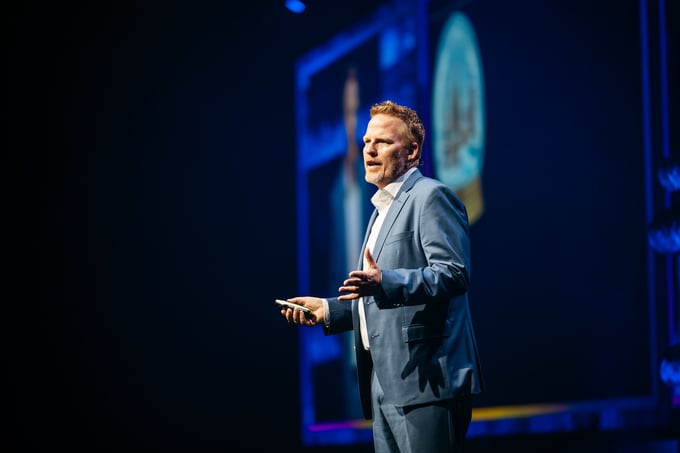
David Bach works where business, government, and global markets meet, helping senior executives and policymakers understand how geopolitics reshapes strategy and leadership.
At Oslo Business Forum, David argued that the scarcest commodity right now is optimism, not critical minerals or capital. He believes Europe has the talent, companies, and resources to lead, provided it starts believing in itself.
David acknowledged that Europe is facing a crisis of confidence. Surveys asking whether people expect the next generation to be better off reveal striking pessimism across many countries. And expectations about the future often influence behavior in the present.
"Optimism, or rather the lack thereof, can become a self-fulfilling prophecy."
If we believe decline is inevitable, we’re less likely to invest in ourselves, our companies, and our communities. On the other hand, optimism can influence whether we take the actions required to produce a different future.
Leaders must have clear-eyed realism about the present combined with a steadfast belief in a better future. Optimism shifts the question from “Why won’t this work?” to “What would have to happen for this to work?”.
Learning #11: Get out of the old style of management.
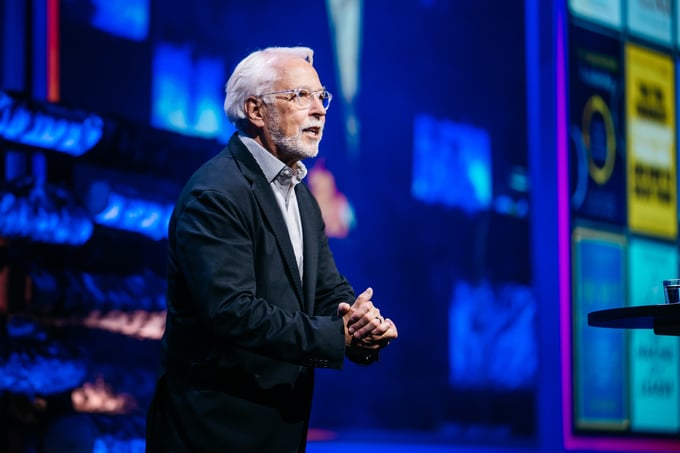
Gary Hamel is a pioneer of management innovation who challenges conventional ideas about strategy, leadership, and bureaucracy to reshape how organizations compete and evolve.
At Oslo Business Forum, Gary offered leaders a clear call to reinvent management itself, building organizations that are resilient, vital, and fit for the future.
Organizations have spent decades implementing approaches to become more agile, innovative, and engaging. Yet, most organizations haven’t fundamentally changed. Gary believes that’s because leaders keep trying to change practices without questioning the beliefs beneath them.
"We have to get the old style of management out of the way for talent, knowledge, and expertise to thrive."
Leaders must rethink the problem they’re trying to solve, and that begins by changing how we think about people. “Don’t think of human beings as resources,” he said. “Think of them as resourceful and realize that your organization is the instrument.”
That means moving beyond bureaucracy to find different, more human ways of achieving structure, accountability, or control. Don’t just manage your existing organization better—build a fundamentally better organization.
Learning #12: Take ownership of the change.
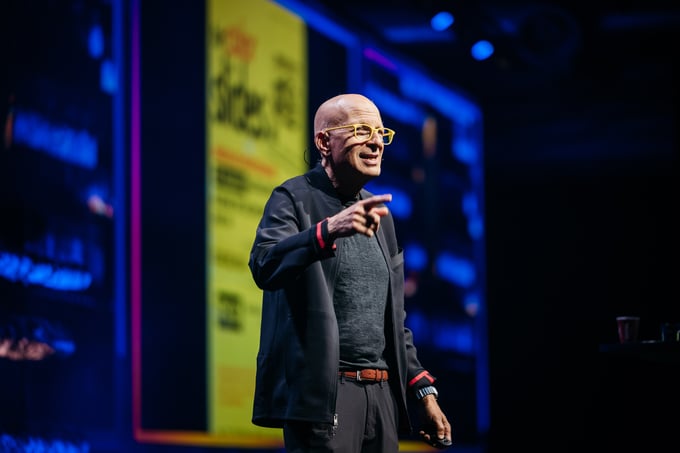
Seth Godin is an influential marketing thinker, bestselling author, and creator of some of the most impactful ideas in modern business.
At Oslo Business Forum, he argued that artificial intelligence will disrupt industries, eliminate familiar ways of working, and create real pain. It will also make previously impossible things possible.
In this revolution, leaders need to reconsider the problems worth solving, recognize the systems that keep old solutions in place, and help people develop the distinctly human capabilities the future will require.
As machines increasingly perform tasks, Seth believes humans need to take greater ownership of something else: the change they're here to make. That starts by understanding the problem, including what you can and cannot control.
"We should stop fretting about things we can't change and instead focus on what is changing around us that gives us an opportunity."
Leaders can't freeze external forces like technology, markets, and accelerating customer expectations, but they can decide how to respond. The future belongs to those who understand what they're trying to accomplish and take responsibility for making it happen.
Want to join the Oslo Business Forum community? Learn more about Oslo Business Forum 2027: Clarity, here.
.webp?width=680&height=680&name=cta_banner_2027%20(2).webp)